AI Beats Radiologists. That's Not the Healthcare Jobs Story.
AI beats radiologists at reading scans, but the real healthcare job risk is in coding, billing, and documentation — not clinical care.
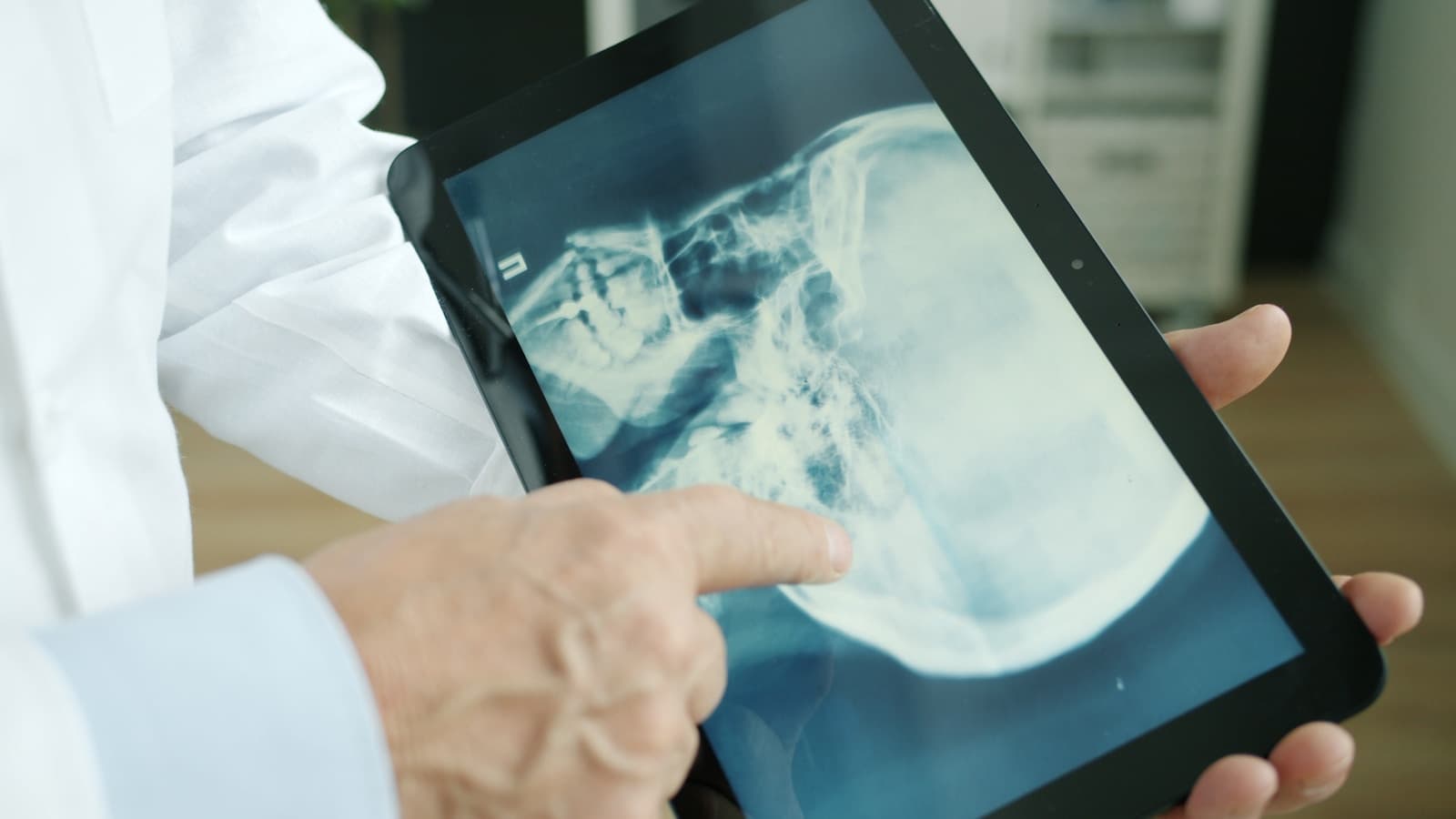
AI hit 94% accuracy detecting lung nodules in a recent study. Human radiologists scored 65% on the same task. Headlines wrote themselves. But the headlines are pointing at the wrong jobs.
The common assumption
The story goes like this: AI is coming for doctors first, because diagnosis is pattern recognition, and pattern recognition is what AI does best. Radiologists, pathologists, dermatologists. The roles that look at images and make calls. If a machine can read a scan better than a human, why pay the human?
What the data actually shows
The diagnostic AI numbers are real, but they come with an asterisk most articles leave out. A 2025 systematic review of AI diagnostic performance across clinical settings found that AI diagnostic models often drop significantly in accuracy when tested on data from hospitals, scanners, or patient populations they weren't trained on. A system that performs brilliantly on one hospital's chest X-rays may stumble at the facility next door. The ECRI Institute named "navigating the AI diagnostic dilemma" as the number one patient safety concern for 2026. These tools work in controlled settings. Deploying them in messy, real clinical environments is a different problem entirely.
Meanwhile, the part of healthcare that AI is already reshaping isn't diagnosis. It's documentation. Ambient AI scribes (tools that listen to patient-doctor conversations and generate clinical notes automatically) hit $600 million in revenue in 2025, growing 2.4x year-over-year. The AI medical scribing market is projected to reach $8.9 billion by 2035. On the billing side, roughly 40% of medical coding workflows are already automated as of 2025, and the AI coding market is on track to grow from $2.6 billion to $9.2 billion over the next decade.
The pattern is clear. AI isn't replacing the person in the room with the patient. It's replacing the person at a desk turning that encounter into paperwork.
The nuance
Regulation is a firewall that most AI-and-jobs analysis ignores. A diagnostic AI can't prescribe medication. It can't order a follow-up procedure. It can't deliver bad news or read the room when a patient is scared. FDA approval for clinical AI tools is slow and narrow by design, because the liability stakes are enormous. No hospital administrator wants to be the first to explain an AI misdiagnosis in court.
Nurses, doctors, therapists, and pharmacists are protected by a combination of licensing requirements, liability frameworks, and something simpler: patients want a human. A 2025 Wolters Kluwer Future Ready Healthcare Survey of healthcare professionals found that trust remains the primary barrier to clinical AI adoption, not capability.
Medical coders, billing specialists, and documentation staff don't have those protections. Their work is structured, rules-based, and high-volume, similar to what's happening in admin and operations roles across other industries. That's exactly the profile AI automates fastest. The Bureau of Labor Statistics still projects growth in health information technician roles (7-10% over the next decade), but that growth assumes humans doing the quality assurance and exception handling that AI can't yet manage on its own.
Clinical vs administrative: where the exposure actually is
| Healthcare Role | AI Impact | Exposure Level | Why |
|---|---|---|---|
| Doctors, nurses, therapists | Augmented (AI scribes, decision support) | Low | Licensing, liability, patient trust |
| Radiologists, pathologists | Augmented (AI assists, doesn't replace) | Low-Medium | Regulation, generalizability concerns |
| Pharmacists | Augmented (drug interaction checks) | Low | Dispensing requires human oversight |
| Medical coders | Automated (40% of workflows already) | High | Rules-based, high-volume, structured |
| Billing specialists | Automated (claims processing) | High | Pattern-matched, low ambiguity |
| Clinical documentation staff | Automated (AI scribes, $600M market) | High | Direct AI replacement available |
What this means for you
If you work in clinical healthcare, your job isn't under the threat the headlines suggest. Your daily work will change (AI scribes, decision support tools, automated triage) but the core of what you do requires physical presence, human judgment, and legal authority that AI doesn't have.
If you work in healthcare administration, coding, or documentation, the math looks different. The question is whether your role is shifting toward supervising AI output or being replaced by it. That depends on the specific tasks you spend your time on, and most people haven't broken their job down that way.
That's exactly what our quiz is built to do. It doesn't guess based on your job title. It scores the actual tasks you perform, so you can see which parts of your role have high automation exposure and which ones don't. Takes about five minutes. You can also browse how AI is affecting other roles for comparison.
Pieter
Founder of losingmyjobto.ai. Not an AI researcher or a career coach. A founder who decided to stop guessing what AI means for jobs and start measuring it. Built this platform using AI tools, so every question this quiz asks is one he has wrestled with himself.
Want to see how this affects your role?
Take the QuizRelated reading
The AI Content Flood Is Making Human Creatives More Valuable, Not Less
AI content is everywhere, but human creative work is pulling ahead on trust. Creative jobs aren't dying — they're splitting into two very different tiers.
The Career Moves That Actually Matter in an AI Economy
The best AI career advice isn't about learning to prompt. The moves that matter most in an AI economy are the ones AI still can't do well.
Marketing Teams Are Shrinking. Their Output Isn't.
AI lets smaller marketing teams produce the same volume of content. But the real shift is from production roles to strategy roles.